
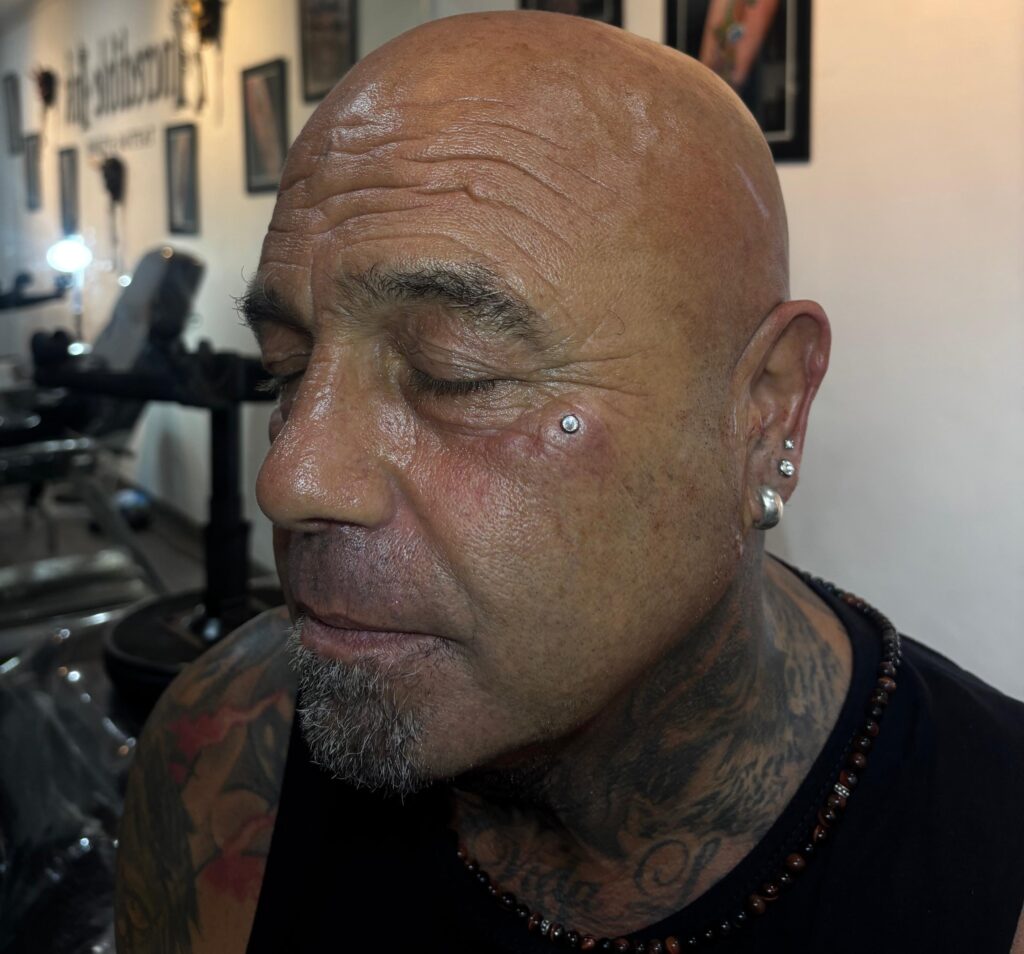
Microdermal piercing is a unique type of body piercing and is classified as a form of advanced body modification. Unlike standard piercings that pass through the skin, a microdermal piercing involves implanting a dermal anchor directly into the skin and tissue, making it far more secure and much harder to remove.
Because the jewelry is anchored beneath the skin, microdermal piercing requires deep knowledge, precision, and years of experience to achieve a safe and successful result.
Where Microdermal Piercing Can Be Placed
Microdermal piercings can be placed on almost any part of the body, as long as there is enough tissue to properly anchor the jewelry, such as:
1. Hands
2. Face (cheeks and forehead)
3. Neck (front or back)
4. Chest or center of the chest
5. Stomach
6. Any area with sufficient skin and tissue for secure placement
Each placement must be carefully assessed to reduce the risk of rejection or complications.
Microdermal Piercing Aftercare
Microdermal aftercare is simple but extremely important:
1. Be very careful of snagging with your hands, towels, or clothing.
2. Avoid swimming in pools for at least 2 weeks, as chlorine and bacteria can increase the risk of infection or rejection.
3. Proper care is essential to prevent infection, rejection, or failure of the microdermal piercing
Following correct aftercare helps ensure long-term stability and healing.
Why Experience Matters
Microdermal piercing is one of the most difficult procedures in body piercing. Not every piercer is capable of performing it correctly. In Bali, only a very small number of piercers are skilled enough to do microdermal piercings properly.
We can perform microdermal piercings on any suitable body area, because we work with Nathan a highly experienced professional piercer, widely recognized as one of the top piercers in Bali and Indonesia.
Microdermal piercing requires deep knowledge, precision, and years of experience to achieve a safe and flawless result.