
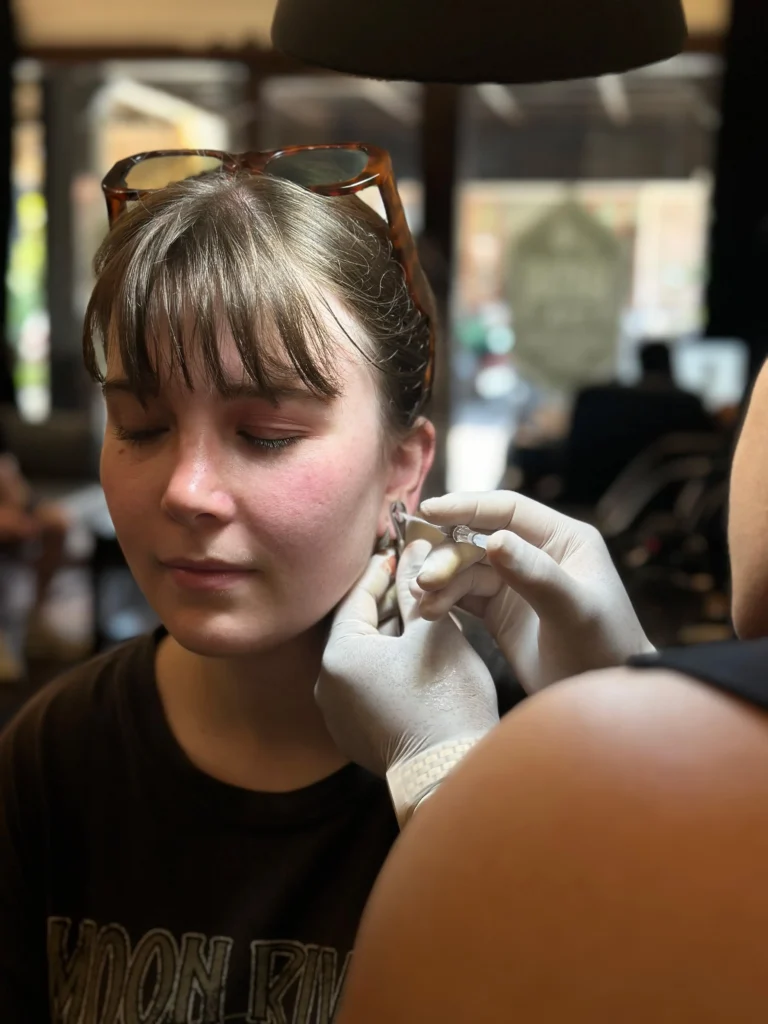
Piercing infections can happen for many reasons, but one of the most overlooked causes comes from the jewellery itself especially pieces that feature diamonds or spiral-shaped designs.
Although these accessories may look beautiful, their rough and sharp textures can unintentionally damage the surrounding skin.
When the diamond or spiral part rotates or shifts inside the fresh piercing, the sharp edges can scratch the tissue, creating small wounds that easily lead to irritation or infection.
1. Piercing infections caused by jewellery with diamond or spiral designs
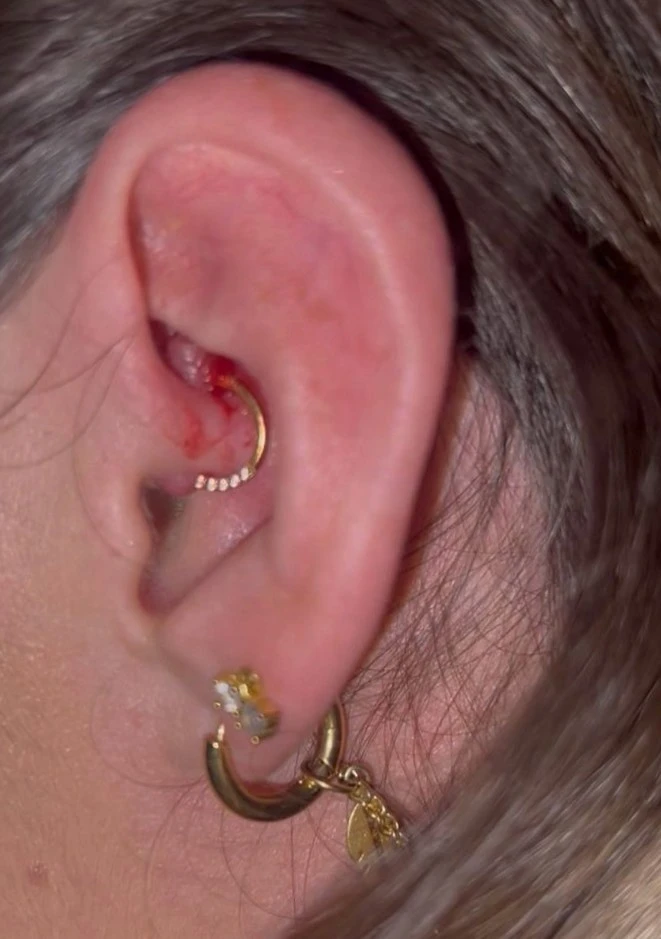
Jewellery that features diamonds or spiral shapes may look attractive, but they can significantly increase the risk of irritation and infection. The textured surface of a diamond is often rough and sharp. When the decorative part rotates or shifts inside the piercing, those edges can scrape the inner tissue. This small, repeated friction can cause micro-tears, leading to swelling, redness, and eventually infection.
Switching to a smooth, basic jewellery piece allows the piercing to rest and heal without further trauma. Once the area is fully recovered, decorative jewellery can be worn again safely.
2. Piercing infections from jewellery that’s too small or too tight
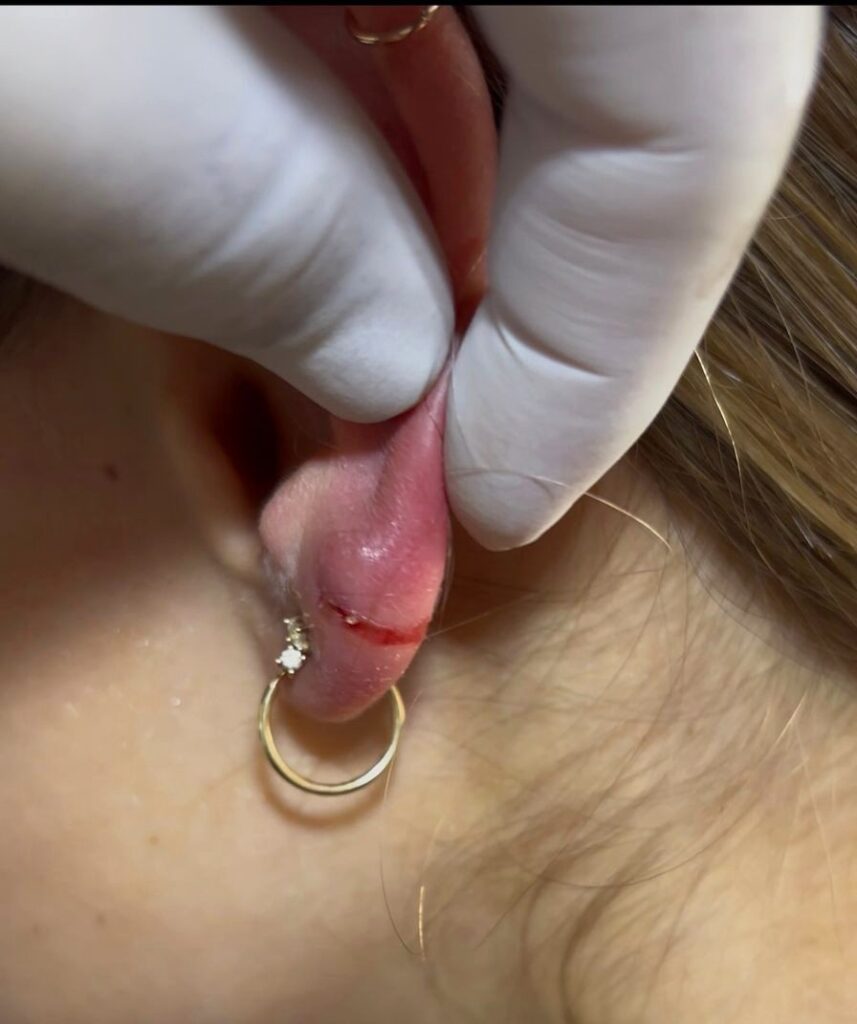
Using jewellery that is too small or pressed tightly against the skin can trigger irritation and infection. After a new piercing, swelling is normal, and if there’s no extra space, the jewellery gets pulled inward as the swelling expands. This pressure can cause the skin to inflame even more.
For initial piercings, it’s safer to use a slightly longer stud or a ring with a wider diameter, leaving at least 3–4 mm of space to accommodate swelling and keep the area safe while it heals.
3. Piercing infections caused by using a piercing gun
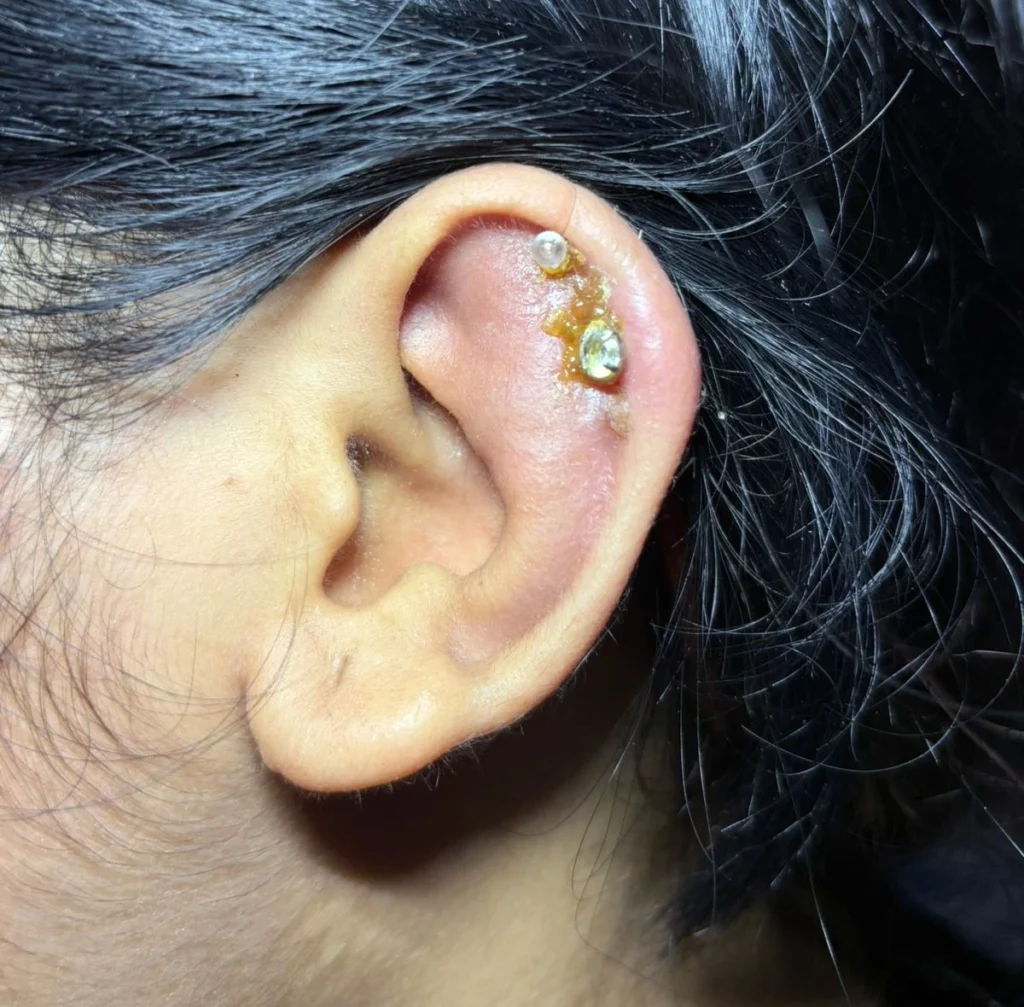
Piercing guns are not truly sterile and are often reused, making them unsafe. The blunt earring used in the gun is forced through the skin, which can crack the tissue or even cartilage because blunt objects aren’t meant to pierce. This impact creates trauma, inflammation, and a high risk of infection or nerve damage.
Using a single-use sterile needle is far safer. Needles are sharp, hygienic, and handled by professional piercers who understand body anatomy, ensuring only the correct areas are pierced and reducing complications.
4. Piercing infections caused by hair or towels getting caught
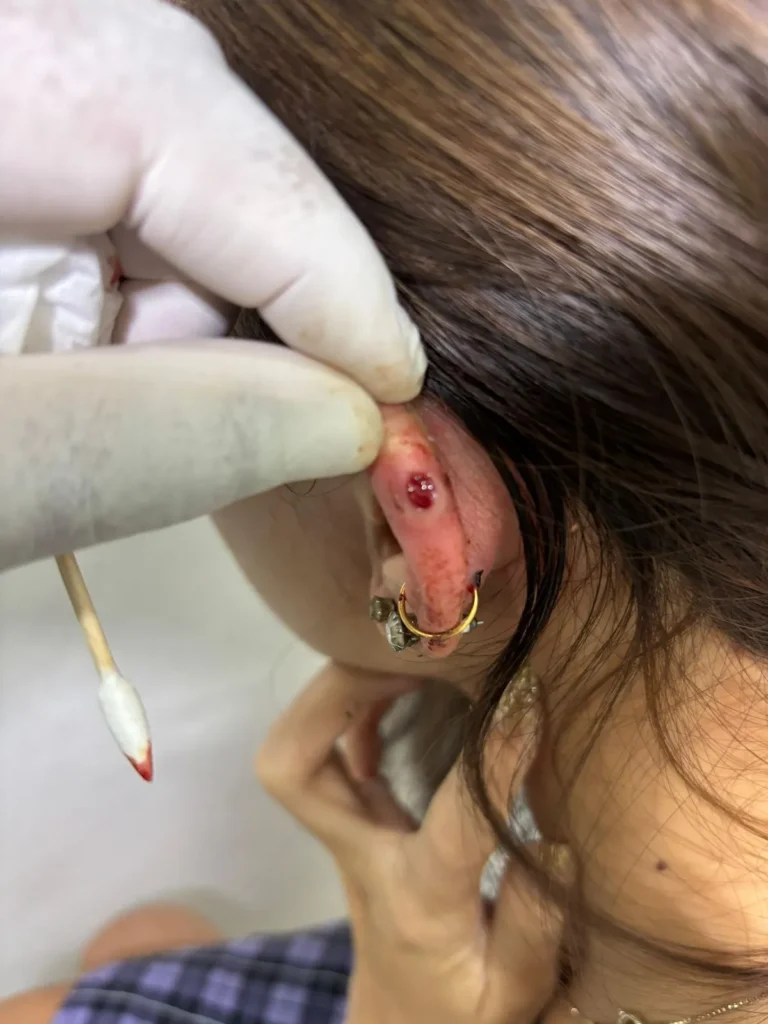
Fresh piercings especially those on cartilage are very sensitive and easily irritated. It’s common to forget you have a new piercing, which makes it easy for the jewellery to get caught on hair, hands, towels, clothing, or even helmets. This constant tugging can cause small injuries that lead to inflammation or infection.
Whenever you feel your hair or clothing pulling on the piercing, fix it gently and keep the area clean. After showering, clean it with a piercing solution, preferably at night after you finish all your activities, to help the piercing stay calm and heal properly.
5. Piercing infections caused by using the wrong cleaning products
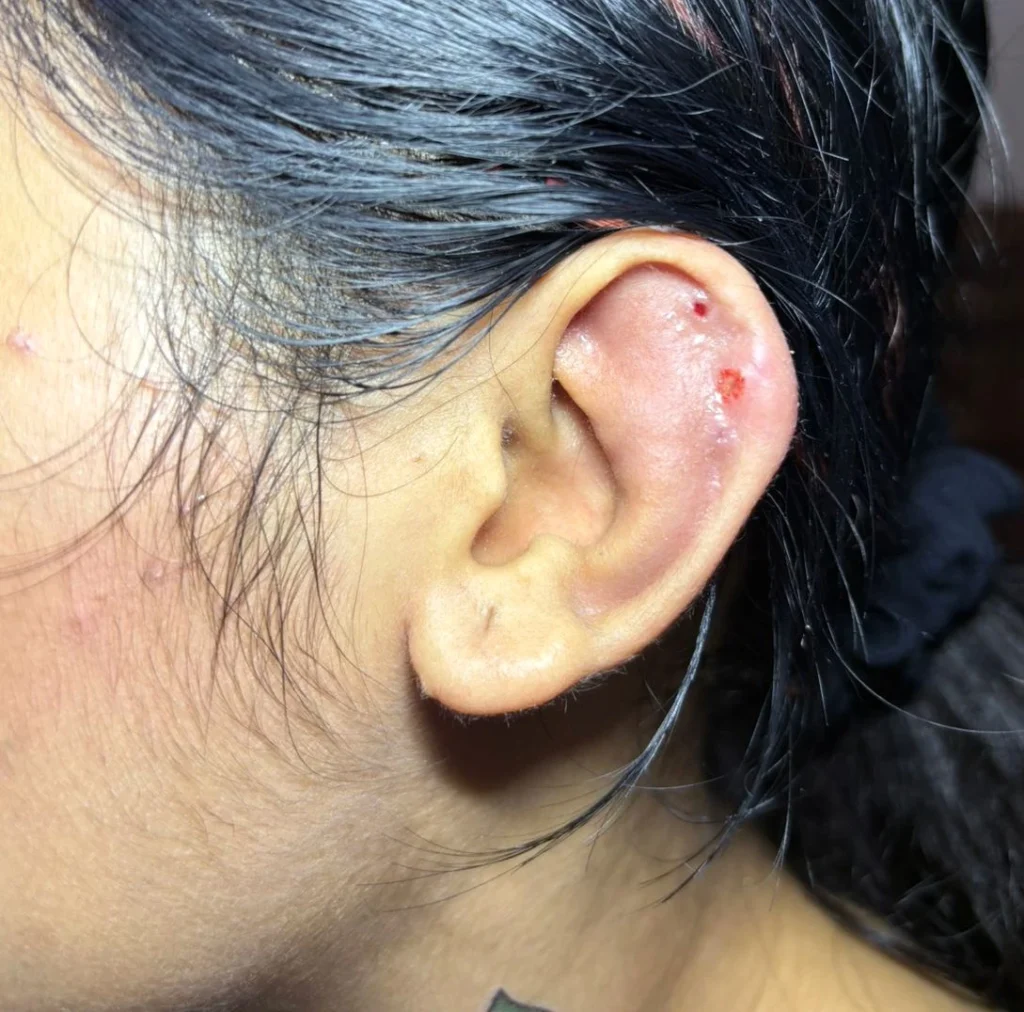
Cleaning your piercing with alcohol can cause stinging, irritation, and trauma that may lead to infection. Oil-based, lotion-based, creams, or ointments (except specific antibiotic ointments with proper dosage) are also not recommended because they contain ingredients that can trap bacteria and slow healing.
It’s safer to clean your piercing once a day using a proper piercing solution. This solution contains no alcohol, oils, lotions, or creams only sodium chloride, which is gentle, safe, and helps dry and speed up the healing process.
6. Our recommended solution for all piercing-related problems
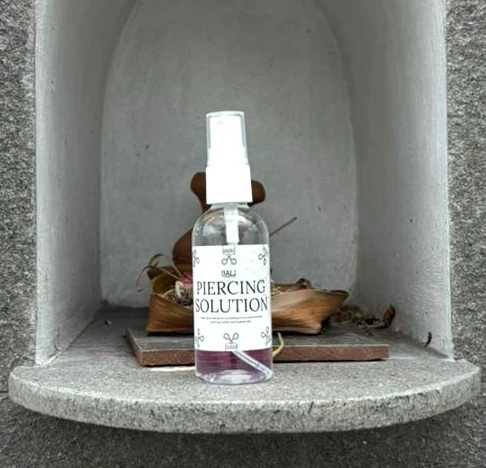
At Bali Piercing Studio, we use our own specially formulated piercing solution trusted by thousands of clients from around the world, including Russia, the US, Canada, Singapore, Europe, and many more. This product was created in September 2018 and has been used for seven years to support safe, effective healing for all kinds of piercing issues.
Its gentle, sodium chloride based formula helps calm irritation, reduce inflammation, and speed up recovery without the harsh chemicals found in alcohol, oils, lotions, or creams.